


River Adventures
Slow journeys through the world’s most culturally rich waterways
River cruising is often associated with Europe’s great cities, sailing along the Rhine or Danube with a glass of something chilled in hand.
That version still exists, and it does it very well.
But beyond Europe, river journeys become a way to access some of the world’s most complex, culturally rich and often logistically challenging destinations, at a pace that feels meaningful and calm.
You unpack once. The landscape comes to you.

What is a River Adventure?
At its simplest, a river cruise is a journey along a waterway, linking places that have historically been connected by trade, culture and daily life.
What makes it an adventure is where those waterways take you.
In destinations such as Southeast Asia, South America or Africa, rivers are not just scenic routes. They are lifelines. Travelling along them offers a perspective that would be difficult, and often impossible, to recreate overland.
Rather than moving quickly between highlights, you travel through a place, watching it unfold in real time.


What Makes it Different?
There is a particular ease to river travel that is difficult to replicate elsewhere.
The pace is unhurried, yet the experience remains rich. You wake up somewhere new, but without the friction of packing, airports or long transfers. The journey becomes seamless, allowing more attention to be given to what you are actually there to see.
This naturally lends itself to a deeper cultural experience. Rivers tend to sit at the centre of daily life, so the places you visit feel lived-in rather than arranged for visitors. You often step straight from the ship into towns, markets or neighbourhoods, without the sense of separation that larger-scale travel can create.
Experiences are typically led by local guides, offering context that goes beyond surface-level sightseeing. In many ways, it feels closer to small group adventure touring, with a shared sense of discovery and a focus on understanding rather than simply seeing.
Ships are smaller, the atmosphere more relaxed, and the connection to your surroundings far more immediate. You are not observing from a distance. You are moving through the landscape itself.
Beyond Europe
While Europe remains the most familiar setting for river cruising, some of the most rewarding journeys lie further afield.
A journey along the Mekong offers a glimpse into life in Vietnam and Cambodia, where floating markets, riverside villages and temples form part of a continuous landscape rather than isolated highlights.
The Amazon shifts the focus towards nature, where the experience is shaped by rainforest, wildlife and remote communities, and where the river itself becomes the only practical way in.
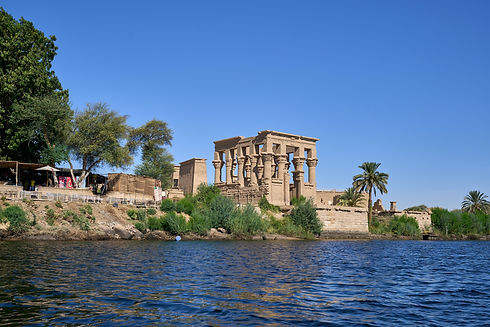
Along the Nile, history unfolds steadily along the banks, with ancient sites woven into a journey that feels both structured and surprisingly calm.
The Ganges offers something entirely different again, shaped by ritual, belief and the rhythm of daily life in northern India.
Elsewhere, the Magdalena in Colombia brings together culture, music and a sense of rediscovery, while the Mississippi offers a slower exploration of American identity through its landscapes, towns and stories.
In Africa, rivers such as the Chobe become part of a broader ecosystem, often paired with safari experiences, where the focus shifts towards wildlife and natural rhythm.
Each river tells a different story. The format simply allows you to follow it.

The River Boats
River boats vary more than people expect, but they share a common thread: scale.
Most vessels carry between 30 and 200 guests, depending on destination and style. This keeps the atmosphere personal and allows access to smaller ports and docking points that larger ships simply cannot reach. It also creates a different onboard dynamic, one that feels more relaxed, more sociable, and far less crowded.
While smaller in size than ocean ships, they are thoughtfully designed to make the most of the space available. Cabins are often outward-facing, with many offering floor-to-ceiling windows or private balconies, so the landscape remains part of the experience even when you are onboard.
There is also a surprising sense of openness. Sun decks stretch along the top of the ship, offering space to sit, read, or simply watch the world drift by. On some vessels, you will find small pools or plunge pools, along with shaded areas and bar service, making it just as easy to spend an afternoon on board as it is ashore.
Inside, the layout is typically centred around a main lounge and restaurant, with some ships offering multiple dining spaces. Meals tend to reflect the region you are travelling through, adding another layer to the journey without needing to seek it out elsewhere. Evenings are generally low-key, with space to unwind rather than a full programme of entertainment.
At one end of the spectrum, there are simpler, characterful ships that lean into authenticity and a more traditional feel. At the other, there are highly refined vessels offering spacious suites, considered design, and a level of comfort that sits comfortably within the luxury space.
The choice is not just about how the ship looks, but how it feels to travel on it. The right fit will depend on whether you are drawn to something more polished, or something a little closer to the places you are exploring.
The Experience
River journeys are shaped by proximity, but also by structure.
Most itineraries range from three to twelve nights, depending on the destination and depth of exploration. Some are shorter introductions, while others form part of a longer, more immersive journey. Either way, each day is carefully paced, balancing time on the water with time ashore.
Unlike ocean cruising, where destinations can feel like brief stops, river cruising tends to offer a more complete sense of place. Ships often dock within towns or cities themselves, which means you step straight into the destination rather than transferring in.
Days are typically built around a series of included experiences, designed to give you a well-rounded understanding of where you are. You might begin the morning with a guided walk through a historic city, spend the afternoon visiting temples, markets or local communities, and return to the ship in time for a relaxed evening and meal onboard.
There is usually a choice in how you explore. Some itineraries offer different levels of activity, from gentle walking tours to more active options such as cycling or longer excursions, allowing you to shape the experience around your pace.
What sets it apart is the continuity. You are not moving between disconnected highlights, but travelling through a place in a way that gradually builds context. By the time you leave, you tend to feel you have understood something of how that destination fits together.
It is structured, but never rushed. Planned, but not rigid. And throughout it all, the river itself remains a constant thread, connecting everything you see.


Combining River & Land
Some of the most rewarding journeys come from combining a river cruise with a broader, tailor-made itinerary.
A Mekong journey might follow time in Cambodia’s temples or Vietnam’s cities. An Amazon cruise can sit within a wider exploration of Peru or Brazil. A Nile itinerary can be part of a more complete journey through Egypt.
How I Help
River adventures can appear straightforward at first, but the differences between destinations, ships and operators are more significant than they seem.
I work with a carefully selected range of river cruise partners, including Uniworld, AmaWaterways, Pandaw, APT, American Cruise Lines and Scenic, to match each journey to the client.
More importantly, I design the wider experience around it, ensuring the river element fits naturally into a seamless, tailor-made itinerary.
